How to Prepare for a Professional Headshot
You’ve been meaning to update your LinkedIn photo for six months now.
Maybe longer. Maybe since 2019, when you cropped yourself out of a wedding photo and told yourself you’d get a real headshot eventually. And every time you think about actually scheduling a headshot session, you feel this low-grade dread that’s hard to name.
It’s not that you’re lazy. It’s not even that you’re broke (though photographer prices don’t help).
It’s that somewhere in the back of your mind, you know a headshot session is going to ask you to do something you’re not sure you can pull off: show up as yourself and let someone document it.
Most headshot advice will tell you what to wear. Which colors photograph well. How to angle your shoulders. As if the hard part is choosing between the navy blazer and the charcoal one.
But that’s not why you’ve been avoiding this.
You’ve been avoiding it because you don’t trust the person who’s going to show up in those photos.
The Thing No One Says Out Loud About Headshots
Here’s what actually happens when most people sit for a headshot:
You show up. You’re wearing something you think makes you look professional, which is code for “like someone who has their life together.” The photographer says “great, just relax,” which is the least relaxing thing anyone has ever said to another human being.
And then you spend 20 minutes trying to figure out what your face is supposed to be doing.
Not what it is doing. What it’s supposed to be doing.
You’re thinking: Do I look confident? Approachable? Like someone people would hire? Like someone who definitely didn’t pour chicken broth in their coffee this morning because the carton looks just like the oat milk?
And the whole time, there’s this voice in your head running a live commentary: That smile looks fake. Now you’re not smiling enough. Your eyes look dead. You look like you’re being held hostage. Why do you look like that? Is that what you always look like?
By the end, you’re exhausted. The photographer shows you some shots. You scroll through them with the enthusiasm of someone reviewing their own autopsy photos. You pick the one where you look “fine” (translation: the least bad), and you tell yourself this is just part of being an adult.
The photo goes up on LinkedIn. It gets exactly zero comments. You never look at it again.
And the thing is: the photo probably isn’t even bad.
The problem is that the person in the photo doesn’t feel like you. It feels like you doing an impression of the kind of person who gets headshots.
What’s Actually Happening Here
There’s a gap.
On one side: who you actually are. Funny, complicated, doing your best, occasionally brilliant, sometimes a mess, fully human.
On the other side: who you think you’re supposed to look like in a professional photo. Polished. Put together. The kind of person who has a 401(k) and strong opinions about project management software.
And when you sit for a headshot, you’re trying to close that gap by performing the second version.
Which never works.
Because the camera doesn’t care what you’re trying to look like. It just documents what’s in front of it. And what’s in front of it is someone spending all their energy trying to not look like themselves.
The result? A photo that technically checks all the boxes (good lighting, decent composition, appropriate attire) but feels completely hollow.
This is why AI-generated headshots are so appealing. They skip the whole uncomfortable “being perceived” part. You upload some selfies, and a computer spits out an image of you if you were slightly more symmetrical and 20% more LinkedIn-appropriate.
And honestly? For a lot of people, that’s fine. If you just need a placeholder image that says “I am a professional human who exists,” AI can do that now.
But if you’re still reading this, there’s a reason why a real headshot still matters.
You’re looking for a photo that actually feels like you. One that doesn’t make you cringe every time someone pulls up your profile. One that somehow captures the version of yourself you see in the mirror on good days (not more attractive, not more impressive, just real).
And that’s a completely different thing.
What This Actually Requires
Here’s the uncomfortable truth: getting a photo that feels authentic means you have to be authentic for the 20 minutes it takes to shoot it.
Not “authentic” in the performative Instagram way. Not “vulnerable” as a personal brand strategy.
Just… actually present. In your actual body. With your actual face doing whatever your face does when you’re not trying to control it.
Which is way harder than picking out a nice shirt.
The Stories We Tell Ourselves
Most of the suffering that happens during a headshot session isn’t about the session itself. It’s about the story running in your head about what the session means.
“If I don’t look confident in these photos, it proves I’m a fraud.”
“If I don’t look approachable, no one will want to work with me.”
“If I look tired, people will think I can’t handle my job.”
“If I look too happy, I won’t be taken seriously.”
These stories feel true. They feel urgent. They feel like the stakes are life-or-death, career-ending, reputation-destroying.
But here’s the thing about stories: they’re always more dramatic than reality.
The reality is that you’re getting some photos taken. That’s it. You’re not being graded. You’re not auditioning for the role of Competent Professional in the movie of your own life. You’re just… showing up and existing for 20 minutes while someone clicks a button a bunch of times.
But the stories make it feel like so much more than that.
And the tricky part? The more you believe the story, the more it shows up in the photos.
When you’re convinced you need to look “confident,” you tense up. Your smile gets tight. Your shoulders creep toward your ears. You end up looking like someone trying very hard to appear confident, which reads as the opposite.
When you’re worried about looking “approachable,” you overcorrect. You smile too big. You widen your eyes. You look like a hostage blinking out a morse code distress signal.
The story about what you’re supposed to look like becomes the thing preventing you from actually looking like yourself.
The Thing That Actually Works (And Why It’s Annoying)
So if trying to look a certain way makes you look fake, and AI photos feel soulless, and your current approach of avoiding the whole thing indefinitely isn’t working… what’s left?
The annoying answer: presence.
Not performance. Not strategy. Just the willingness to be whoever you are in that exact moment, without trying to upgrade or optimize or fix it in real-time.
I know. That sounds like something a yoga instructor would say right before trying to sell you a $40 candle.
But stay with me.
Think about the last time someone took a photo of you that you actually liked. Not loved. Not thought was perfect. Just… didn’t hate.
Chances are, it wasn’t a formal portrait. It was probably someone catching you mid-laugh. Or focused on something else. Or talking to someone you care about.
What made it work wasn’t that you looked better in that moment. It’s that you weren’t trying to look like anything. You were just there. Present. Doing the thing you were doing.
That’s the whole game.
The goal of a good headshot session isn’t to perform confidence or approachability or whatever adjective you’ve decided you need to project. The goal is to spend 20 minutes being present enough that the camera catches you instead of the story you’re telling about yourself.
Which, if we’re being honest, is easier said than done.
Because most of us have spent years building up a pretty solid catalog of evidence that we are Not Enough in various ways. Not confident enough, not successful enough, not put-together enough, not whatever-enough.
And when someone points a camera at us, all that evidence comes flooding back.
How to Actually Prepare (The Part With Actionable Advice)
OK, enough philosophy. Let’s talk about what actually helps.
Before the Session: Get Clear on What Story You’re Telling
Remember how we talked about the gap between who you are and who you think you’re supposed to be?
The work here is to close that gap before you show up.
Not by becoming more impressive. By getting honest about who you’re actually trying to reach and what they need to know about you.
Ask yourself:
Who’s going to see this photo?
Potential clients? Hiring managers? Collaborators? Your Aunt Linda who keeps asking when you’re going to get a “real job”?
What do they actually need to feel when they see it?
Not “impressed.” Not “intimidated.” Probably something closer to “yeah, I could see myself working with this person” or “they seem like they know what they’re doing.”
What adjectives describe you on a good day?
Not aspirational adjectives. Not the ones you think you’re supposed to embody. The ones that are actually true.
Thoughtful? Funny? Steady? A little weird? Intense? Warm? Analytical?
Write them down. Bring them with you. These are your anchors.
When you’re in the session and your brain starts spiraling into “do I look like a CEO/thought leader/serious professional,” you can come back to these. No, I’m going for thoughtful and a little weird. That’s the assignment.
This is not about crafting a personal brand. It’s about giving yourself permission to show up as the person you actually are instead of whoever LinkedIn thinks you should be.
Choose Your Photographer Like You’re Choosing a Therapist
Here’s something most headshot advice skips entirely: the photographer you choose matters more than what you wear.
I’m not talking about technical skill. Most professional photographers can operate a camera and set up decent lighting. That’s table stakes.
I’m talking about whether you can actually relax around them.
Because here’s the thing: if you’re spending the whole session trying to impress the photographer, or worried they’re judging you, or feeling like you need to perform “confident professional” for their benefit, you’re cooked. The photos will show it.
So before you book someone based on their portfolio or their prices, do this:
Read their website. Not just the services page. Read their about page, their blog if they have one, anything that shows how they actually think and talk. Do they seem like someone you could have a conversation with? Or do they sound like a corporate branding bot?
Talk to them on the phone. Seriously. A five-minute conversation will tell you more than scrolling through a hundred portfolio images. Do they have a sense of humor? Do they ask you questions? Do they seem genuinely interested in you, or are they just trying to close a sale?
Ask yourself: could I see voluntarily hanging out with this person? You don’t have to want to be best friends. But if the vibe is “I’d rather get a root canal than spend 20 minutes with them,” find someone else.
The difference between a photographer who makes you feel at ease and one who doesn’t is the difference between photos where you look like yourself and photos where you look like you’re being held at gunpoint.
It matters. A lot.
The Secret Weapon: Bring a Friend
Here’s a tip most people would never think of, but it’s maybe the most useful thing in this whole post:
Bring a friend to your session.
I know. It sounds counterintuitive. Isn’t this supposed to be a solo thing? Won’t having someone there make it more awkward?
No. The opposite.
Here’s why it works:
When it’s just you and the photographer, there’s this pressure to perform. To be “on.” To somehow generate authentic emotion out of thin air while a stranger points a camera at your face.
But when your friend is there (especially if it’s someone who can make you laugh) the whole dynamic shifts.
Suddenly it’s not a photo session. It’s you and your friend goofing around while someone happens to be taking pictures.
Maybe you’re both getting headshots and you switch off. Maybe your friend is just there for moral support. Either way, they become the thing that gets you out of your head.
Because here’s the magic: it’s way easier to be present with another person than it is to be present alone.
Your friend makes a dumb joke. You crack up. The photographer catches the moment right after you’ve belly-laughed (not the wide-open-mouth mid-laugh shot, any decent photographer knows not to use those), but the few seconds after, when your face is still soft and open and there’s no curtain in front of you.
That’s the shot.
When you combine a photographer with a good sense of humor and a friend who can make you laugh, the whole thing turns into a bit. You’re all playing around. The session stops being this high-stakes performance and becomes something closer to hanging out.
And that’s when you get photos that actually look like you.
What to Wear (Briefly, Because You Already Know)
Look, I’m not a fashion expert. My wife has told me repeatedly that I have no style. But I do know what works in photos, so here’s the short version:
Wear something that fits. Not tight. Not baggy. Just… fits. Clothes that fit well say “I have my life together.” Clothes that don’t say “I borrowed this from my cousin’s college roommate.”
Solid colors are your friend. Jewel tones, earth tones, neutrals. These photograph well and don’t distract from your face. Neon, on the other hand, makes you look like a crossing guard or an ’80s fitness instructor.
No logos. Unless your job is literally being a walking billboard, don’t wear your company logo. And definitely don’t wear someone else’s company logo. No one is impressed that your polo was made by Nike.
Avoid patterns that could start a small brushfire. Thin stripes, tight checks, and busy prints can create a moiré effect on camera, which is a fancy way of saying “your shirt will look like it’s vibrating.”
Iron your clothes. I’m begging you. There are YouTube videos if you get stuck.
Accessories are fine, just keep them simple. A watch, a necklace, earrings (these can add personality). Rainbow suspenders and a bolo tie, less so.
The real rule: wear something you feel like yourself in.
If you normally wear blazers, wear a blazer. If you normally wear flannel, wear flannel. If you show up in clothes that feel like a costume, that’s exactly what they’ll look like. The same principles apply to family photos, by the way.
The Night Before: Bring Memories, Not Anxiety
Here’s something that actually helps: come to the session with a few specific memories that make you feel good.
Not generic positive thoughts. Specific moments.
Want to look approachable? Remember the last time someone laughed at one of your jokes (even if it was a pity laugh).
Want to project confidence? Think about a time you solved a problem that felt impossible. Or parallel parked on the first try while construction workers watched.
Want to seem warm? Picture someone you love. Your kid, your dog, your partner, your hermit crab Gloria.
These aren’t affirmations. They’re shortcuts.
When you’re in the session and your brain starts running its “you look weird” commentary, you can redirect it. Instead of trying to make your face do something, you just think about the thing that naturally creates the expression you’re going for.
It’s the difference between “smile like you’re confident” (impossible) and “remember that time you nailed the presentation” (might actually work).
What Not to Do
Don’t get a drastic haircut the day before. You’ll spend the whole session adjusting to it, and that self-consciousness will show.
Don’t try a bold new makeup look if you never wear makeup. Same reason.
Don’t stay up all night doom-scrolling. You can’t Facetune away existential exhaustion.
Don’t drink eight espressos right before. You’ll look like someone who’s being chased.
Don’t tell yourself this is going to be easy. It might not be. That’s fine. Difficult things can still turn out well.
During the Session: What’s Actually Happening
OK, you showed up. You’re wearing clothes that fit. Maybe you brought a friend. The photographer seems like a human being you can tolerate.
Now what?
Here’s what most people don’t realize: a good headshot session is a collaboration, not a performance.
You’re not there to follow directions like you’re being assembled by IKEA instructions. You’re not auditioning for anything. You’re just there to exist while someone figures out how to document that existence in a way that actually looks like you.
Which means the photographer’s job isn’t to bark commands at you until you accidentally stumble into looking natural. Their job is to create the conditions where you can relax enough that “natural” just happens on its own.
My job is to notice when you’re getting in your head and pull you back out. This is true whether I’m photographing you solo or with your whole family. To say something dumb that makes you laugh. To give you something to do with your hands so you stop thinking about your hands. To catch the moment right after you’ve forgotten you’re being photographed.
Your job is simpler: show up and let me do mine.
What to Expect
The session will probably feel weird at first. That’s normal.
You’ll be hyperaware of your face. You’ll wonder what your hands are supposed to be doing. You’ll have the distinct sensation that you’ve forgotten how to stand like a regular human being.
This passes.
Usually within the first five minutes, once we’ve taken a few shots and you’ve seen that you don’t look like a hostage, your nervous system starts to settle. You realize I’m not judging you. You realize the camera isn’t some kind of truth-detecting lie detector that’s going to expose you as a fraud.
And then we can actually get to work.
The Thing About Posing
If I ask you to do something that feels slightly odd, like lean forward or drop your shoulder or shift your weight, just trust me.
The camera sees things differently than your eyes do. What feels “normal” to you often reads as stiff in photos. What feels like you’re leaning way too far forward usually looks perfectly natural.
This is not about tricking the camera. It’s about accounting for the fact that a 2D image flattens things in ways that require small adjustments.
So if I say “tilt your head just a tiny bit to the left,” I’m not critiquing your head. I’m just trying to work with the light and the angle and the fifty other variables that go into making a photo look the way I know it can.
You don’t have to understand why. You just have to try it and see if it feels OK.
And if it doesn’t feel OK, tell me. This is a conversation, not a drill.
When Your Brain Starts Spiraling
At some point during the session, your brain will probably try to hijack the whole thing.
Do I look confident? Do I look approachable? Is my smile weird? Why does my face feel like this? Do I always look like this?
When this happens, here’s what helps:
Focus on something external. Not your face. Not whether you look good. Something outside yourself.
If your friend is there, look at them. Listen to what they’re saying. React to them like you would in any normal conversation.
If your friend isn’t there, I’ll give you something to think about or talk about. Sometimes I’ll just ask you a question about your work or your life, not because I need the information, but because it gets you out of your head.
The goal is to shift your attention away from “how do I look right now” and toward literally anything else.
Because the weird truth is: the less you think about the photos, the better the photos get.
The Moment It Clicks
There’s usually a moment, somewhere in the middle of the session, where something shifts.
You stop performing. You stop monitoring your face. You make a joke or your friend says something funny or I do something ridiculous, and for a second you just forget that you’re being photographed.
That’s the moment.
That’s when I get the shot that actually looks like you.
Not because you suddenly became more photogenic. Because you stopped trying.
And once it happens once, it gets easier to find again. The rest of the session becomes less about “getting it right” and more about just hanging out while I click the button a bunch of times.
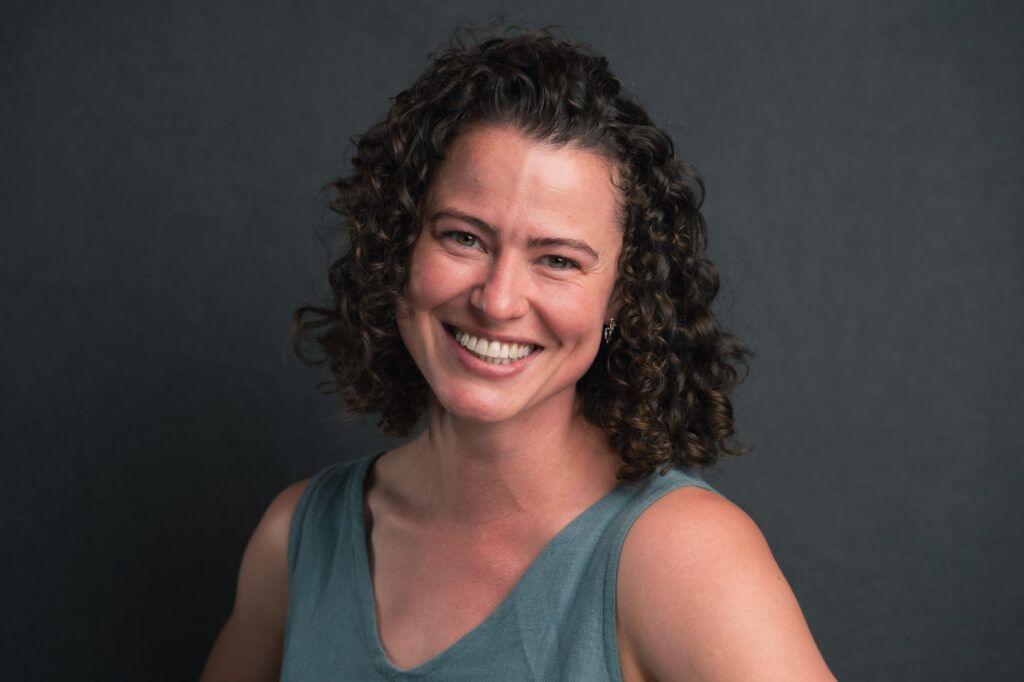
After the Session: What Happens Next
The session’s over. You survived. You maybe even had fun, which is deeply suspicious and possibly a sign that something went wrong.
Here’s what happens next.
Proof Gallery
Within 24 hours, you’ll get access to an online gallery with all the shots from the session. You can see the full timeline and process here. Not just the “good” ones. All of them.
This is where most people panic.
Because when you look at 50 photos of yourself in a row, your brain does this thing where it starts picking apart every single image. My smile looks weird in this one. My eyes look dead in that one. Why is my face shaped like that?
Here’s the trick: don’t look at them alone.
Seriously. Get your friend, your partner, someone whose opinion you trust, and go through them together.
Because the photo you think is terrible (“my smile looks too big”) is probably the one everyone else loves. And the photo you think is fine (“at least I look serious and professional”) is probably the one where you look like you’re contemplating mortality.
Other people see you more clearly than you see yourself. Let them help.
You can pick your favorites on the spot, or you can take a day to think about it. Either way, once you’ve made your selections, I’ll retouch them and deliver the finals within 10 business days.
(Need them faster? Rush delivery is available for an extra fee, but honestly, if you’re in that much of a hurry, you should have booked this three weeks ago.)
Why the Photo Might Feel Weird at First
Here’s something nobody warns you about: when you finally get a photo that actually looks like you, it might feel… off.
Not bad. Just unfamiliar.
That’s because most of us have a mental image of ourselves that’s based on mirrors and selfies, which are both reversed. When you see a photo of yourself the way other people see you, it can feel like something’s wrong, even though nothing is.
Add to that the fact that you’re used to seeing yourself in motion, not frozen in a single moment, and it makes sense that any photo is going to feel a little strange at first.
Give it a few days. Show it to people you trust. Let it sit.
Most of the time, the photo that feels the weirdest at first is the one you end up liking most a week later.
What to Do With Your Photos
You now have a headshot that actually looks like you. Congrats. Here’s how not to waste it:
Update everything at once. LinkedIn, your website, your email signature, whatever professional profiles you have. Rip the band-aid off. Don’t let the old photo linger on some forgotten platform where a potential client might find it and wonder if you’re the same person. And once you have photos you actually like, use them. Actually display them.
Use the high-res version for print. If you’re putting this on a conference badge or a brochure or anywhere physical, don’t use the web-sized file. It will look like garbage.
Crop it appropriately for each platform. LinkedIn wants a square. Twitter wants a circle. Your website might want a horizontal. Don’t just upload the same file everywhere and hope for the best.
Don’t over-edit it. I already retouched it. You don’t need to run it through six Instagram filters. If you feel the urge to Facetune yourself into oblivion, that’s a sign the photo isn’t working, and you should pick a different one.
Replace it in 2-3 years. Or sooner if you change your hair dramatically or, I don’t know, grow a beard of bees. People should be able to recognize you from your photo. If they can’t, it’s not doing its job.
The Real Reason This Matters
Look, I get it. A headshot feels like a small thing. It’s just a photo. It’s not going to change your life.
But here’s what it actually does:
It gives people a way to see you before they meet you. And whether that first impression is “yeah, I could see working with this person” or “this photo was clearly taken in 2007 at a bar with a flip phone” makes a difference.
More than that, though, having a photo you actually like means you stop avoiding the thing.
You stop putting off updating your LinkedIn. You stop cringing every time someone pulls up your profile. You stop feeling like you’re misrepresenting yourself with an image that doesn’t match who you are now.
You get to just be a person who has their shit together enough to have a current, decent photo of themselves. Which is a low bar, but also kind of a relief.
And if we did this right, you also got something else: 20 minutes where you weren’t performing. Where you weren’t trying to be anyone other than exactly who you are.
That’s worth more than the photo itself.
So Now What?
If you’ve made it this far, one of two things is true:
Either you’re procrastinating on something else and this was a pleasant distraction (in which case, you’re welcome), or you’re actually considering getting a headshot and you’re trying to figure out if this is something you can handle.
Here’s my take: if the idea of a headshot session makes you feel like you’re about to be graded on something you can’t control, you’re probably not looking for the standard “stand here, smile, we’re done in six minutes” experience.
You’re looking for something that feels less like a transaction and more like a conversation. Less like a performance review and more like spending 20 minutes with someone who’s genuinely interested in figuring out how to make you look like yourself.
If that sounds right, let’s talk.
Not because I’m trying to sell you something. Because if you’re going to do this, you should do it with someone who gets it. Someone who understands that the hard part isn’t smiling on cue, it’s trusting yourself enough to stop performing.
I can’t promise the session will be easy. But I can promise it won’t feel like a corporate headshot factory. And I can promise that if you show up willing to be a little vulnerable and a little weird, we’ll get something real.
Reach out if you want to chat. Or if you just want to tell me about your hermit crab. I’m here for both.