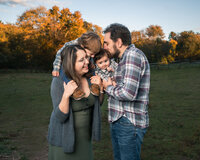
How to Look Natural in Family Photos: Five Ideas from Taoist Philosophy
The most common question I get before a session isn’t about outfits or timing or whether the kids will cooperate. It’s some version of this: how do we look natural in family photos?
The honest answer is that you probably can’t make it happen. But you can stop preventing it.
I’ve been photographing families on a working farm just outside of Boston for years, and the pattern is consistent: the families who try hardest to control their session tend to get the worst photos. The families who let go tend to get the ones that stop you mid-scroll.
I’ve also been listening to a book called The Tao of Parenting in the car. It’s based on the Tao Te Ching, a Chinese philosophical text from around 500 BCE. 81 short chapters. Roughly zero sentences that make immediate sense on the first read.
And yet it keeps describing what I see in sessions.
What follows are five ideas from Taoist philosophy, each one matched to a story from my actual life. They’re not five different concepts. They’re five ways into the same room.
Wu Wei: Stop Trying to Make It Happen
Wu wei is usually translated as “effortless action.” It’s not passivity. It’s not doing nothing. It’s more like acting from what’s actually true in the moment instead of what you think should be happening.
The week before Thanksgiving, Gus and I both had norovirus at the same time. I won’t go into full detail because this is a family photography blog and there are limits. But “two nauseous buffoons locked in the most baby-proofed room in the house” covers most of it.
All I wanted was to disappear into my phone and wait for the day to be over. Every time Gus climbed on me I caught myself bargaining with a toddler: “Gus. Sir. Please. No. Please play with a toy. Do you see the cat in the book? Please, god.”
And then, for reasons I still can’t explain, I made a silly face at him.
He looked at me. Made one back. I made a worse one. He topped it. And suddenly we were rolling around on the floor together, laughing in hell.
No plan. No effort. No trying.
A maternity shoot at Plum Island showed me the same thing from the other side of the camera. I spent most of that session in pursuit mode, chasing my daughter Mae around the beach, toggling between photographer and dad, trying to convince her — okay, trick her — into cooperating. I was miserable. By the time we were wrapping up, I realized I’d barely noticed how beautiful everything around us was.
Then I basically gave up. Mae had run off again, and I stopped chasing her.
She came sprinting back on her own. Tongue out to the side, eyes wide, and she shouted: “Mama, Dada, I love you so much!!” My wife and I both started crying immediately.
I didn’t get a picture of that moment. I’m glad I didn’t. I was just someone’s dad, standing on a beach, witnessing something. But for the rest of the session, I stopped trying to make anything happen. Those are the images I’m most proud of from the whole day.
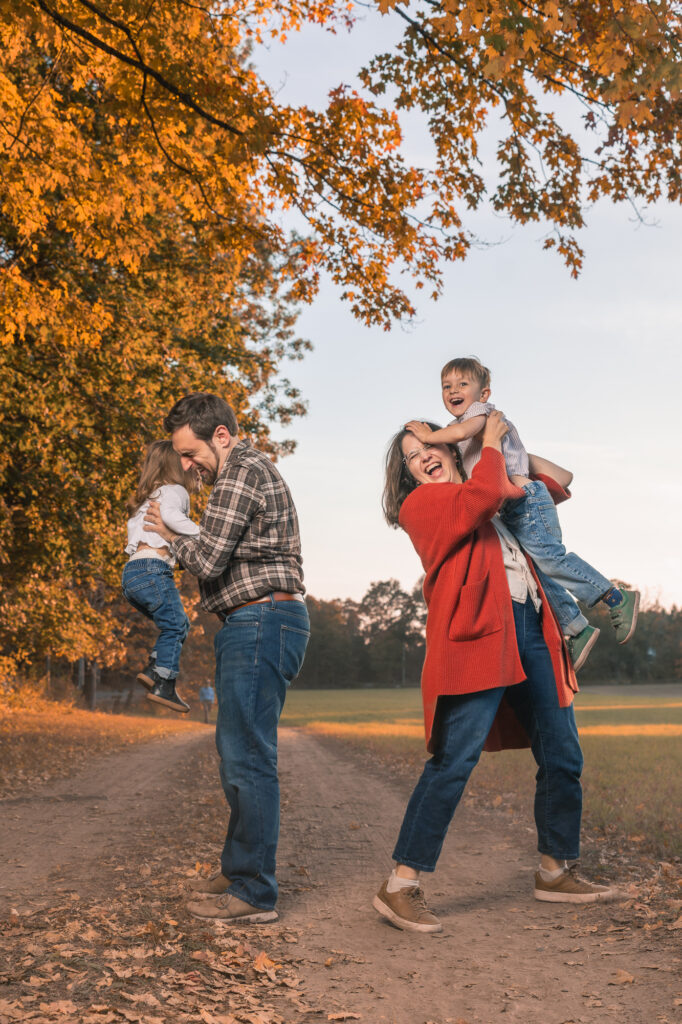
In a session, wu wei looks like noticing what’s already happening instead of trying to manufacture something better. Usually something is already happening. Usually it’s better than what you had in mind.
The full norovirus story: Presence, Chaos, and the Silly Face That Changed Everything. The Plum Island shoot: Maternity Photos with a Toddler.
Try this before your session: Spend one afternoon with your kids without taking a single photo. No phone, no camera. Just be in it. Notice what happens. That’s the version of you I want to show up.
Ziran: The Current Is Already Moving
Before anything goes wrong, there’s already something happening.
Every March, on warm rainy nights, the spotted salamanders in Lincoln migrate to the vernal pool where they were born. Hundreds of them move through the dark in the same direction, drawn by something electrochemical and ancient. They’ve been doing this since there were dinosaurs. Since before there were flowers.
On land they squirm and jerk forward, but in the water they’re dancing. There were so many of them swirling together that I couldn’t tell where one ended and another began. And then, suddenly, I couldn’t tell where I ended and the rest of the world began. The sound was inside me and outside me at the same time. For a moment I stopped being a person in the woods. I was the woods. I was the frogs, the raindrops, the salamanders, the night.
That’s what I’m looking for in a session. Not to create that — I can’t create that — but to recognize when it’s starting to happen and stay out of its way.
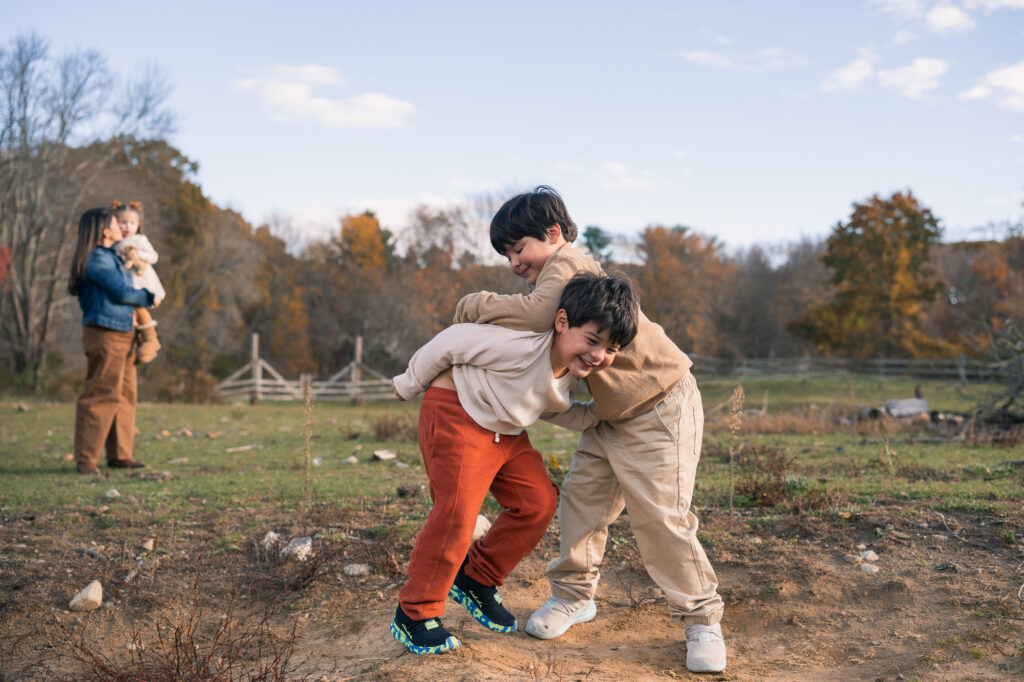
Ziran means something like “self-so-ness.” Things being exactly what they naturally are. A family being themselves is more interesting than a family performing “family.” Every time. The chaos, the weird faces, the kid who won’t stop doing the thing — that’s not the obstacle. That’s what I came for.
There’s a line I wrote after one of these March nights that I keep coming back to: how many sacred, beautiful things do we speed through without noticing because we’re focused on getting somewhere other than here?
The full salamander story: The Big Night.
Try this the morning of your session: Give the whole family twenty minutes to just play before you leave. No structure, no directing. Show up warm instead of wound up.
Zhi Zu: Stop Waiting for May
There’s a framing for parenting that feels true until you look at it directly. The idea is that it’s hard but rewarding — you put in the sleepless nights and the tantrums, and somewhere on the other side is the payoff. The child you’re raising is a means to the adult they’ll become, and the adult they’ll become is the point.
But what is the point, exactly? And when does it arrive?
Mae wakes me up at 2am. One at a time, she issues requests: a glass of water with ice, no straw. A reminder that the humidifier needs refilling. Four specific lovies that could be anywhere in the house. I spend twenty minutes looking for the last one — Uh Oh the Elephant — which turns out to have been with her the whole time. She knew.
Then I wake up with her arm around me and her head on my chest, and her breathing is ASMR for my soul.
That’s not two different versions of her. That’s the same kid, twenty minutes apart. The 2am negotiations aren’t the cost of admission. The arm around your chest isn’t the reward. Those are both just her, right now, exactly as she is.
Zhi Zu comes from Chapter 44 of the Tao Te Ching. The line that gets me: “There is no greater catastrophe than not knowing what is enough.” The trap isn’t that we don’t love our kids enough. It’s that we’re always oriented toward some future state where things will finally be complete. The present is infrastructure for something better that’s coming.
I’m trying not to miss April because I’m waiting for May.
The families who go home with the best images are almost never the ones who came focused on getting the shot. They’re the ones who treated the ninety minutes as the thing itself.
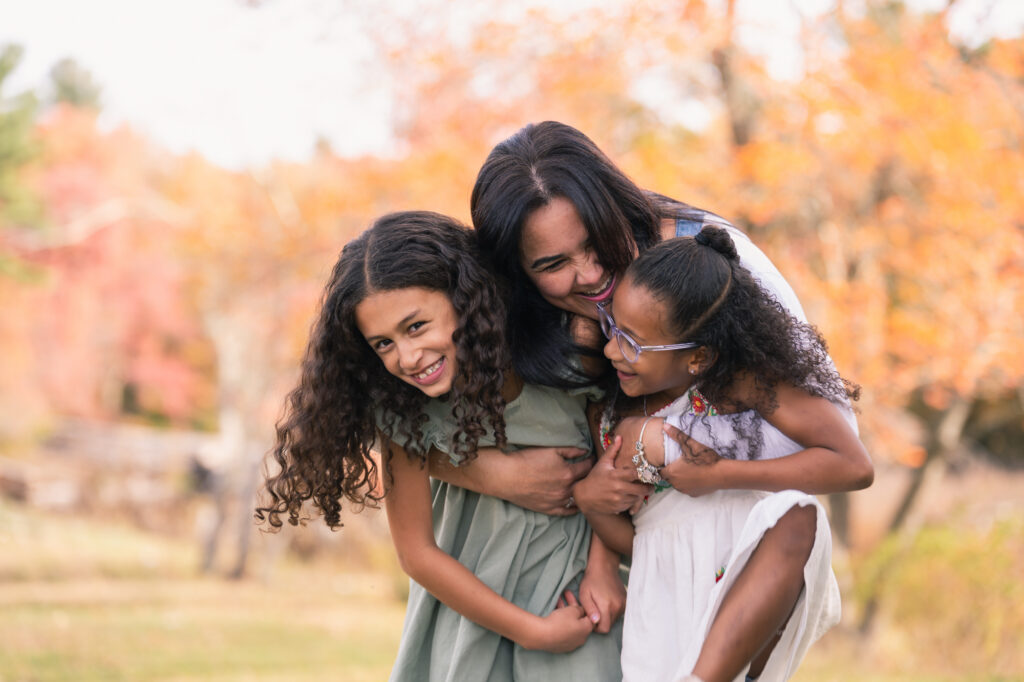
The full letter: I Love My Kids More Than Anything.
Try this before you leave the house: Tell yourself one true thing about each of your kids as they are right now. Not who you hope they’re becoming. Who they actually are this week, this phase. Bring that version of them. That’s who I want to photograph.
Yin/Yang: The Thing Going Wrong Is the Thing
I had a kid climb very high in a tree during a session. His mom was pretty horrified.
I said: let me get some pictures of him up there.
They have some really cool photos of a kid up in a tree.
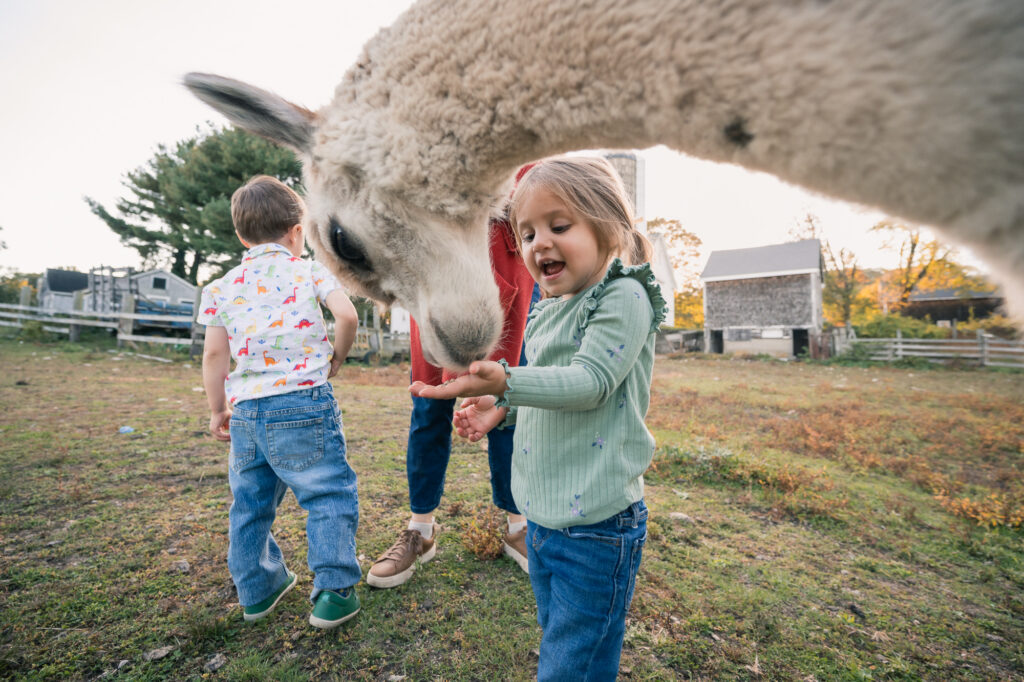
Then there was a senior portrait session. She’d had her makeup done, she looked perfect, she was having a genuinely wonderful time feeding the alpacas. And then Hattie, with no warning whatsoever, gurgled and spat a full mouthful of food directly into her face. Point blank. Deeply rude. Completely classic Hattie.
Lucky for me, both the girl and her mom thought it was the funniest thing that had ever happened. Some of the photos from the thirty seconds after that are the best from the whole session.
Yin and yang is the idea that what seems like its opposite is actually part of the same thing. The good moment and the bad moment aren’t separate. They’re in each other.
The session going sideways is often the session going exactly right. The parent who can hold that — who can say “there it is” instead of “this is ruining it” — almost always ends up with something better than what they came in hoping for.
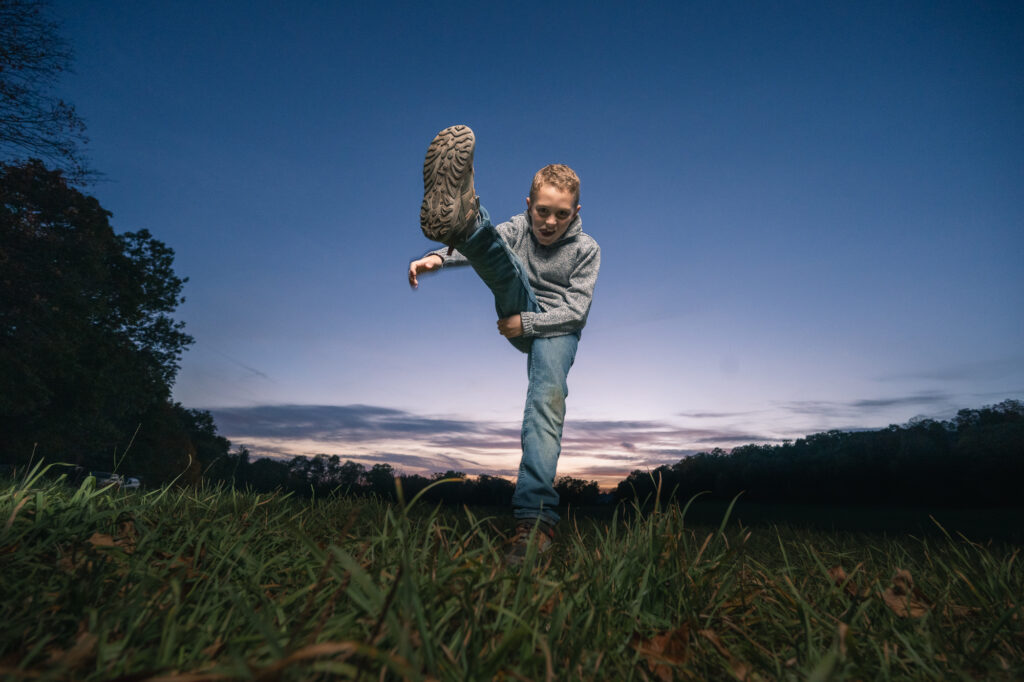
Try this before you leave the house: Lower the bar. Not your standards — just the bar for what counts as a good day. Something is going to go wrong and it might be funny. When it happens, say “there it is.” Then take a breath and see what opens up.
Yielding: What Surrender Actually Means
Gus needed an MRI at four months old.
They wrapped him in an inflatable tube, placed him face-down in the machine, and gave me a button to press if anything went wrong. My job was to feel for his pulse through his ankle. The moment it started, he screamed. Not crying. Screaming. Primal terror condensed into one continuous wail.
I tried singing a song I made up called The Bouncing Train loud enough for him to hear through his ear plugs. Turns out it’s hard to sing loudly, sound calm, and cry at the same time.
And then something cracked open.
I just stopped fighting. Stopped wrestling with reality. I gave up. I turned toward something I can’t fully name and said, quietly: please help. And something changed — not on the outside, but inside me. Enough to stay. Enough not to press the button and start the whole ordeal over again.
Surrender didn’t mean I stopped doing things. It meant I stopped doing them alone, and stopped disagreeing with what is.
The Tao Te Ching has a lot to say about water. How it’s the softest thing and yet it carves through rock. How it doesn’t fight what’s in its path. It goes around. Or under. Or it just waits.
I’ve watched what happens when a parent tries to force cooperation out of a kid who isn’t ready to give it. The harder they push, the harder the kid becomes. Tension travels. It moves from parent to child the way water moves through soil. And even when force works — when a parent manages to extract a smile from a kid who’s been corrected into compliance — it shows. That’s not their face. It’s a kid wearing a smile that doesn’t belong to them.
Water doesn’t fight the rock. It finds another way.
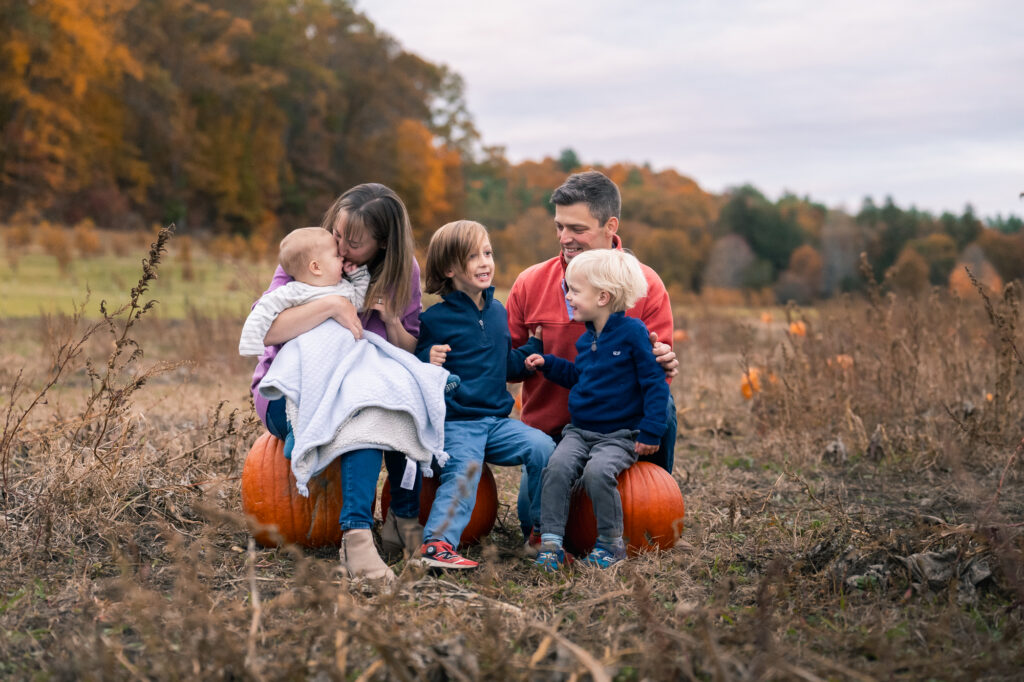
The full letter, including what I’ve learned about surrender across sixteen years: On Surrender.
Try this during the session: When you feel the urge to direct or correct, ask yourself what it would look like to go around this instead of through it. You don’t need the answer. Just asking usually shifts something.
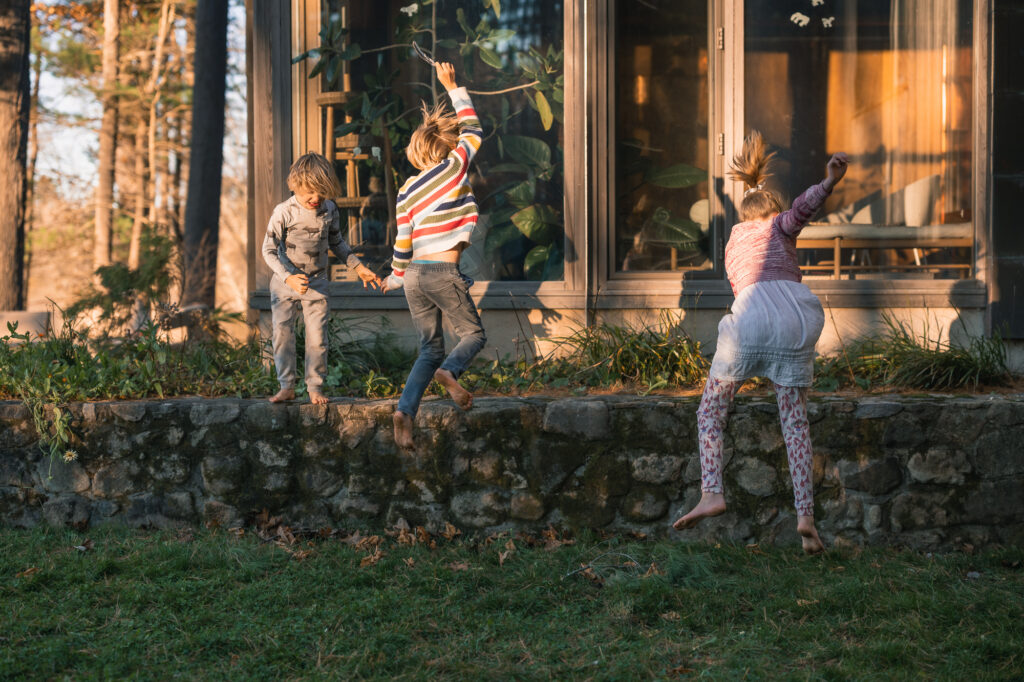
The Last Thing
The Tao Te Ching says the same thing 81 times because that’s how long it takes to hear it. I keep writing letters about it for the same reason.
The salamanders don’t think about where they’re going. They just go. They’ve been doing it for two hundred million years and it seems to be working out.
If you want to go deeper on what all of this looks like in practice, the post that lives underneath this one is here: How to Prepare for (and Actually Enjoy) a Family Photo Session.