Family Photoshoot Tips: How to Prepare for (and Actually Enjoy) Your Session
This guide covers everything you need to know to prepare for a family photo session, from mindset and logistics to outfits, kids, and what actually makes photos feel meaningful.
Planning a family photo session can feel deceptively simple until you’re actually doing it. Suddenly you’re googling family photoshoot tips, coordinating outfits, negotiating with tiny humans, and wondering how this turned into a stress event instead of something meaningful.
This guide is here to help you prepare for a family photo session in a way that actually works in real life. Not the Pinterest-perfect version, but the one where kids have opinions, plans fall apart, and the best moments happen when you stop trying to control everything.
Below, you’ll find practical family photo session tips for what to wear, how to talk about the session with your kids and partner, what to bring, how to stay present when things go off script, and how to end up with photos that feel honest instead of performative. If your goal is to enjoy the experience and walk away with images that reflect who your family really is, you’re in the right place.
In this guide:
- How to Prepare for a Family Photo Session
- What a Family Photo Session Can Actually Feel Like
- How to Talk About Family Photos (With Your Kids and Partner)
- What to Wear for a Family Photo Shoot (and What Not To)
- What to Bring (and What to Leave in the Car)
- Staying Present When Things Go Off Script
- What Happens After the Photo Shoot
- Questions to Ask Your Photographer
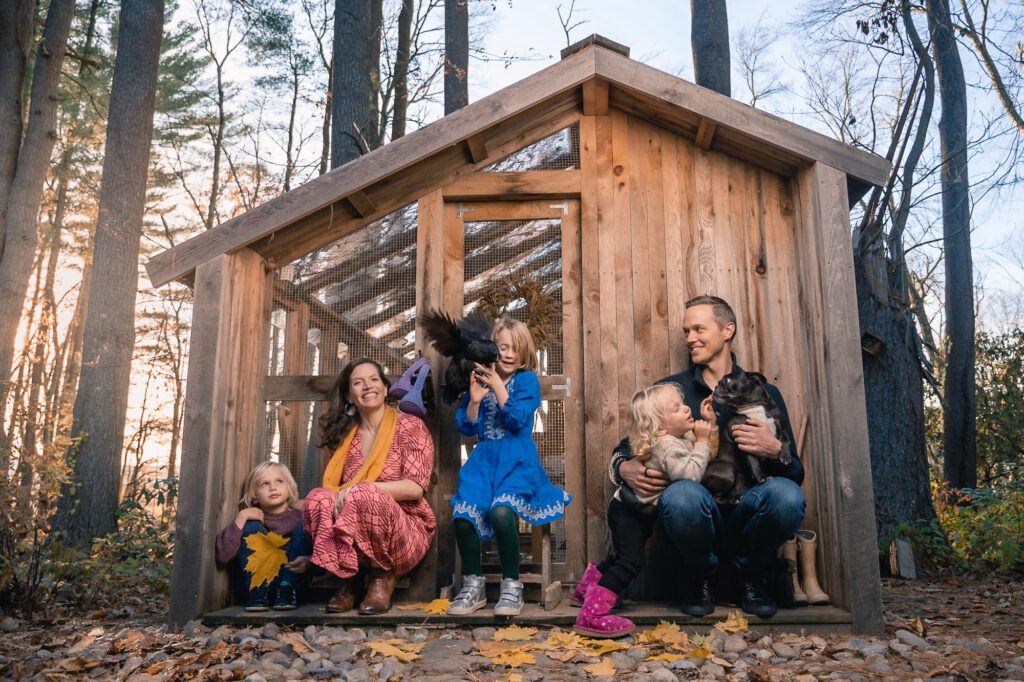
Why Get Professional Family Photos Done?
Maybe you grew up in a house with pictures on the walls. And you noticed it gave you a sense of place. A feeling of this is where I belong.
Or maybe you regularly forget what your children look like because time is moving so fast you could have sworn you just found out you were pregnant yesterday. And now there’s a small human demanding you call a grilled cheese an “egg sandwich with no egg” or they simply will not eat it.
Maybe you want to document little ordinary details. The chaos, the tenderness, the fleeting expressions. Maybe you want some tangible view into that timeless, eternal energy of love that exists between all of you.
Maybe it’s because you want a Christmas card so you can show everyone you kind of have your sh*t together. Or maybe it’s because you want to get more Facebook likes than Miranda did for her crappy iPhone photo.
For whatever reason, you’ve decided you’re getting family photos.
And you’re hiring a professional because your camera roll has 600,000 bad photos in it, and you’re in maybe three of them. Unless you’re one of those people with really long arms. Or someone who carries a selfie stick at all times. (Hopefully not.)
But even when you’re the one taking pictures of your kids, the moment they sense the camera coming out, they behave like a vampire when you pull out a garlic-infused silver cross.
So every picture you have is either them doing a forced, horrible, “cheeeeese” smile, or it’s a picture of them running away from you. Very few of them are an actual reflection of your family’s true spirit.
And now you’re here, Googling “family photoshoot tips” or “how to prepare for a family photo session,” probably with 37 tabs open and a knot in your stomach about coordinating outfits, wrangling kids, and somehow not looking exhausted in every single frame.
Good News: you don’t have to have it all figured out.
You just need a little preparation, the right mindset, and a photographer who knows how to work with the gorgeous mayhem of family life instead of against it.
This guide will walk you through the family photoshoot tips that actually matter. Not the Pinterest-perfect version, but the version where someone has a meltdown (maybe you, maybe a toddler, honestly it could go either way), your shirt gets a new mystery stain, and somehow it all turns out better than you imagined.
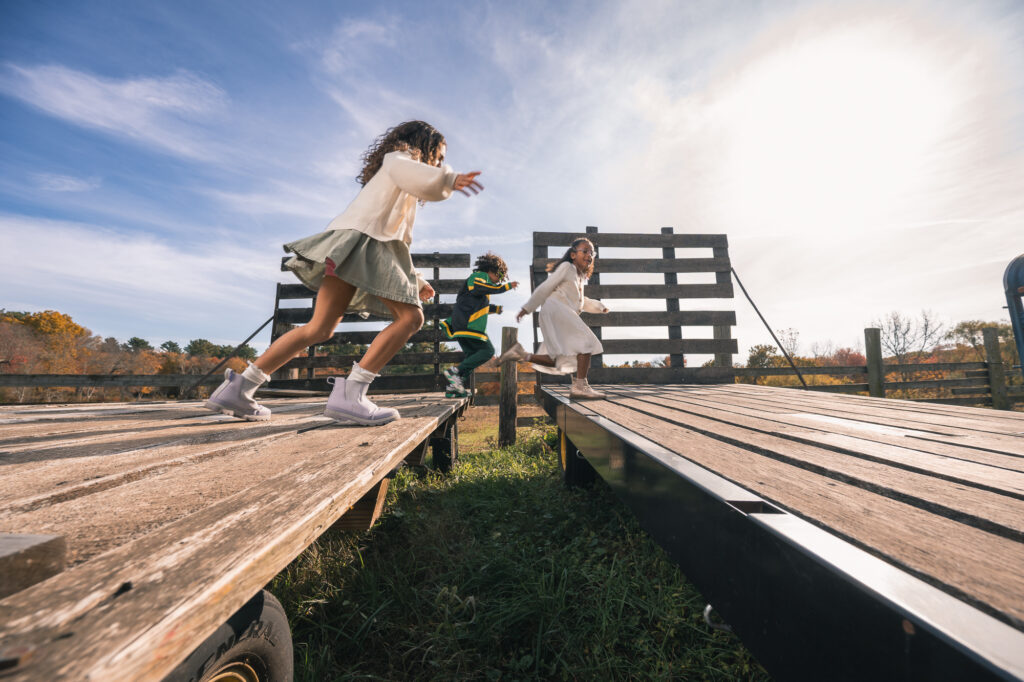
What You’re Probably Imagining (And Dreading)
When you think about doing a family photo session, what comes to mind?
Maybe it’s being told to stand in different places in a field while passersby give you sideways glances and your level of self-consciousness reaches beyond what you thought its maximum capacity could be.
Meanwhile, your kids are both upset because the ice cream that was promised to them wasn’t delivered immediately. You forgot they have no concept of time.
Your partner (who agreed to this begrudgingly) is so tense that their fingers are digging into your hip. You’re clenching your teeth so hard you could probably crack a Brazil nut in there.
The photographer keeps saying things like “Just look natural!” while telling you to stand at a 47-degree angle with your hand on your hip in a way no human has ever naturally stood.
You’re stress sweating. Your kids and partner are over it. You’re wondering if this was a terrible idea.
And you’re thinking: This is supposed to be fun?
It doesn’t have to be like that.
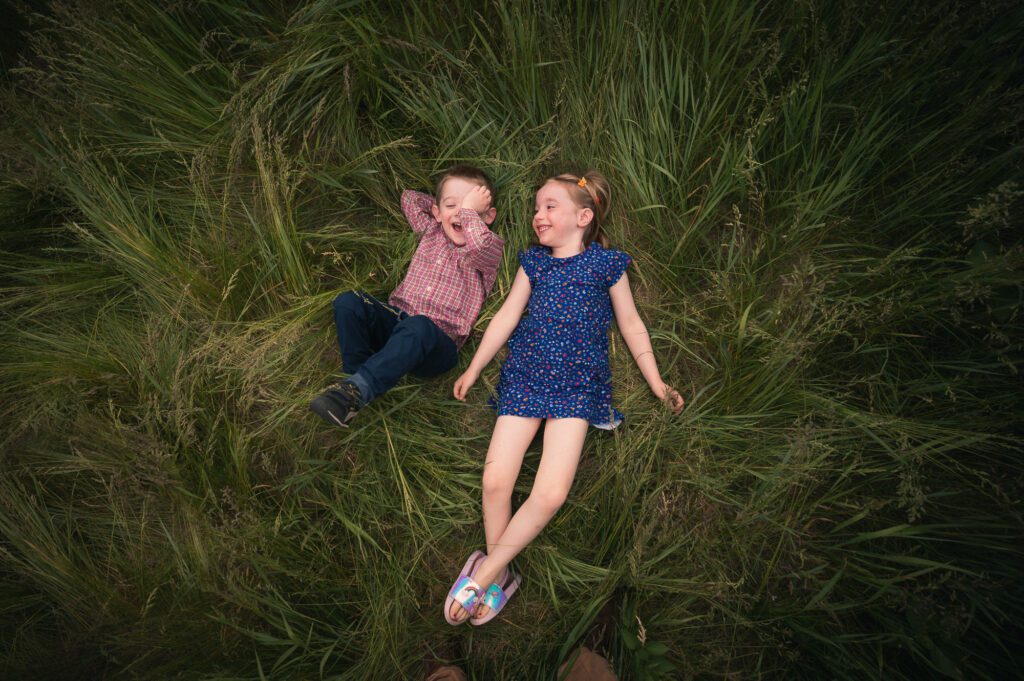
What a Family Photo Session Can Actually Look Like
Picture this instead:
You’re watching your two kids feed alpacas. They’re both throwing their heads back in laughter. Not just because of the absurdity of these creatures (which look like a sheep and a giraffe miraculously hybridized), but because their ridiculous fuzzy lips are tickling their fingers.
And you notice that you and your partner are embracing.
Not because someone told you to. Not to pose for a picture. Just because there’s this closeness.
And it occurs to you that this hasn’t happened in a long time. That you haven’t been together in this way in a while. Because it’s so hard to make space for just being together when there are all the appointments and classes and sports and music and god damn activities. When it all feels like chores sometimes. When you have to wear 10 different hats and some of those hats have other tiny hats underneath them. When it feels like you just work so you can pay other people to spend time with your kids.
But right now, in this moment, there’s this warmth. This full presence.
The roles have ended. The self-consciousness has dissolved. You’re not four separate individuals trying to coordinate and perform. You’re just a family.
And there happens to be somebody there who knows a lot about light and angles and all that. Someone whose job it is to notice this opening and turn it into something beautiful that can point you back to it.
What you’re left with is this window into the eternal love and joy that’s always beneath whatever else is going on. A reminder that it’s always there.
That’s what a good family photo session can be. Not a performance. Not a checklist. Not something you have to nail.
Just space to be together. And someone to bear witness to it.
PS Like the sound of feeding alpacas? Check out my Farm Session Page to read more about how I do my sessions on our farm just outside of Boston.
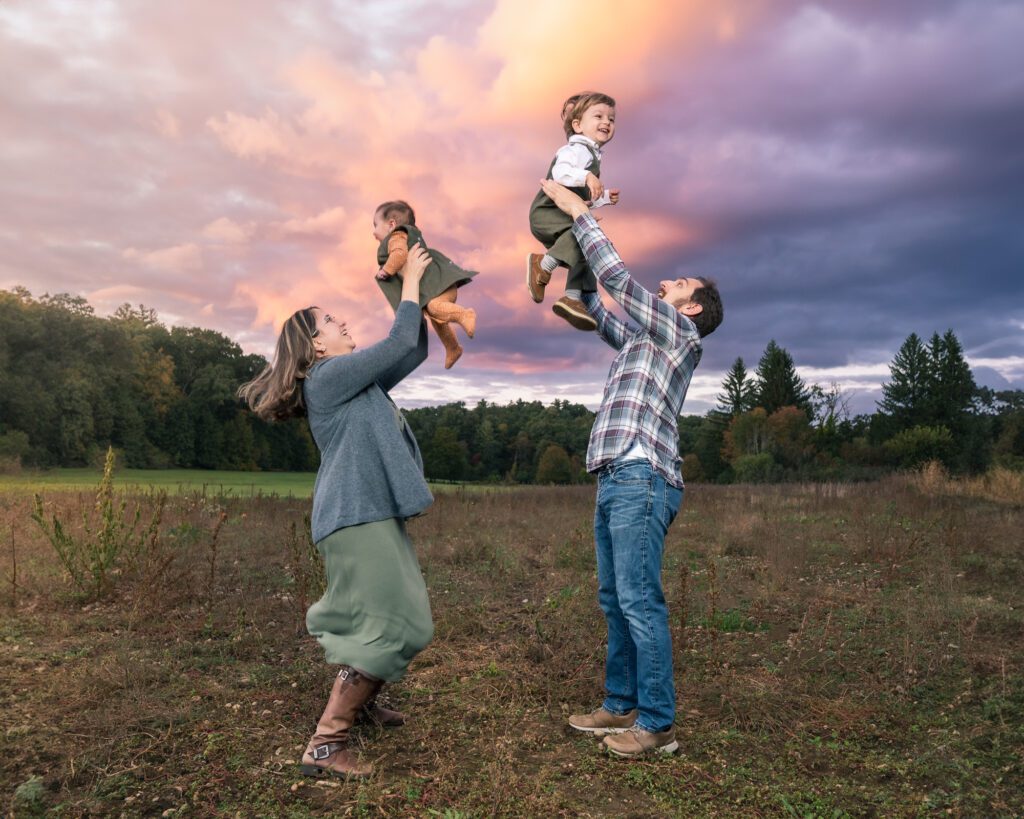
How to Get Ready for a Family Photo Session
Before we talk about outfits or logistics or what to bring, let’s start here: Why are you doing this?
Maybe it’s for a Christmas card. Maybe you want photos on the wall. Maybe you grew up in a house with pictures everywhere and it made the place feel like home. And you want that for your kids too.
Maybe you’re seeing all these Christmas cards from other families who just look so happy, and you think: our family is happy too. We just don’t have anything to celebrate that. To make it visible.
Whatever your reason is, that’s fine. That’s good, actually. It’s helpful to know what you’re after.
But here’s the thing: Once you know what you want, the best thing you can do is set an intention to let go of it.
When I Got Caught in the Trap
A couple years ago, we did a maternity shoot at Plum Island. Perfect late summer day. My wife Sue, our daughter Mae (who was almost 3 at the time), and enough spare outfits, snacks, and camera gear to ensure that we’d get the most perfect photos ever.
I was excited. This was going to be beautiful. Meaningful. I had the vision in my head.
And then I spent most of the session chasing Mae around the beach, trying to convince (okay, trick) her into kissing Sue’s belly or standing still for five seconds.
I was toggling between photographer mode (“let’s make art”) and parent mode (“please don’t lick that”). And honestly? I wasn’t having a good time. I was getting frustrated. Not yelling or anything, but definitely trying to make it happen. Trying to control it.
By the time we were wrapping up, I realized I’d been so caught up in getting the shot that I’d barely noticed how beautiful everything around us was. The light. The breeze. The fact that we were together on this gorgeous beach.
Mae had run off again. Because of course she had.
And then she came sprinting back toward us. This tiny person who somehow grew out of Sue’s body. She flashed her signature tongue-out-to-the-side grin, widened her impossibly blue eyes, and shouted: “Mama, Dada… I love you so much!!”
Sue and I both started crying immediately.
All that stress, all that trying to make something happen. It just melted. In that one moment, there was this overwhelming clarity. Like truth and gratitude and love had folded into a single point of light, and there was no separation between us.
No photographer hat. No parent stress. Just connection.
And no, I didn’t get a picture of that exact moment. Honestly? I’m glad I didn’t. If I’d been fiddling with my camera or adjusting settings or worrying about the light, I might have missed it completely.
But for the rest of the time we were there, I stopped trying to make anything happen, and that’s when I did take my favorite images from the session.
Click here to read the full story and see how they turned out
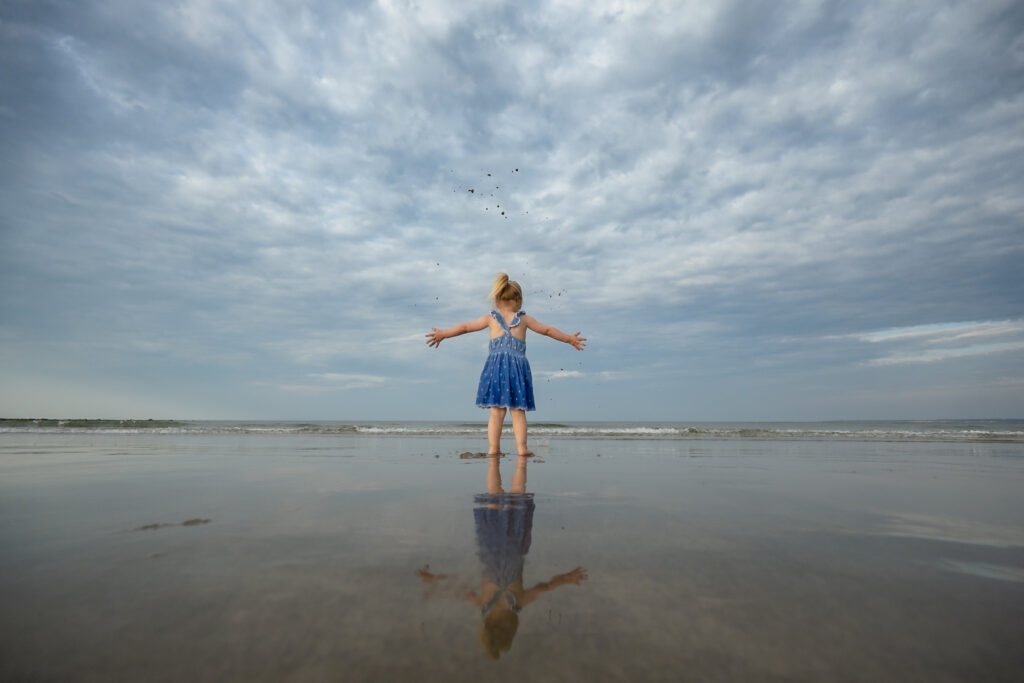
The Lesson: Presence over performance.
The biggest pitfall I see (as both a photographer and a parent) is trying to control the session.
Control comes from fear. Fear that it won’t go a certain way. Fear that you’ll waste your money or fail somehow or not get what you need.
But here’s what I learned that day: The magic doesn’t happen when you force it. It happens when you let go.
When you stop trying to make everyone behave and smile and cooperate, and you just focus on being together, that’s when the real moments show up. That’s when your kids relax. That’s when you and your partner are in sync. That’s when you actually experience what’s happening instead of just managing it.
You don’t need to be perfect. You don’t need everyone to behave. You just need to show up, let it unfold, and trust that someone who knows what they’re doing will catch the moments that matter.
I wrote more thoughts about fear and control here if you want to go deeper.
A Word About Being Camera Shy
If you’re feeling anxious about being photographed, that’s not weakness or vanity. It’s biology.
For most of human history, we lived in small, tight-knit groups where your survival literally depended on what other people thought of you. If you didn’t fit in, you could be exiled. And exile meant almost certain death. So we’re hardwired to care about how others perceive us.
Layer on top of that a culture (especially for women) that constantly reinforces the message that appearance matters more than anything else, despite what we say about “what’s on the inside.” Our whole economy is built around telling people they’re not enough. Especially when it comes to how we look.
So of course you feel self-conscious. That’s not a shortcoming. That’s being human.
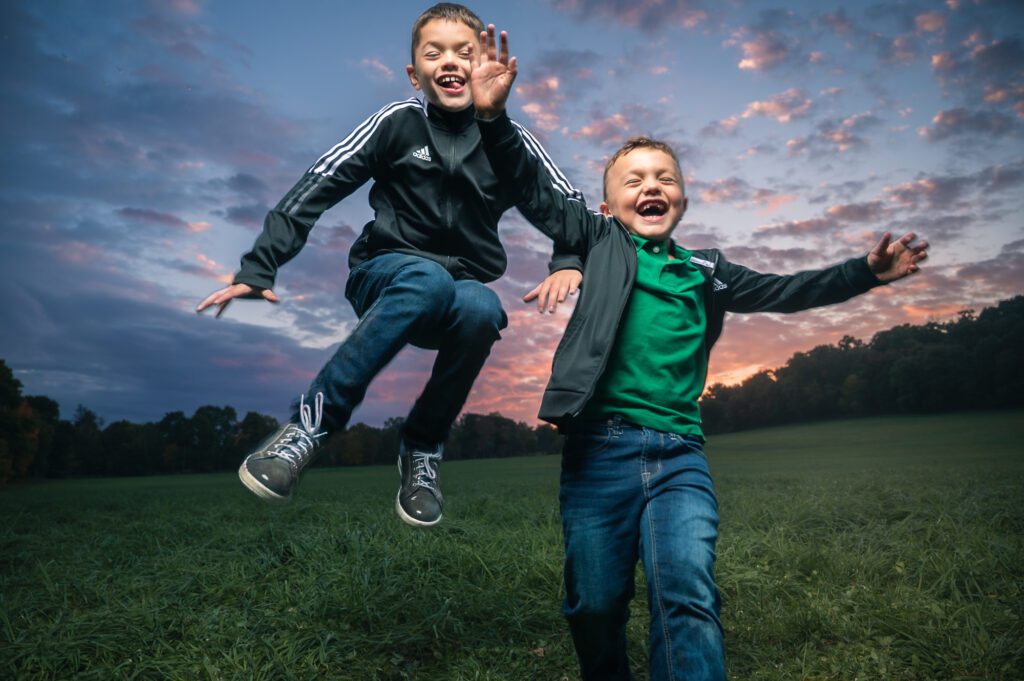
But here’s what I’ve noticed during sessions: There are these moments when all of that dissolves. When you’re not thinking about how you look or whether you’re doing it right. When you’re laughing so hard at something your kid just did that you forget you’re being photographed. When you’re locked in with your partner and everyone else disappears.
In those moments, you’re not performing. You’re not watching yourself from the outside. Your mind and body are in the same place at the same time. You’re just… there. Fully present.
And those are always the best photos. Not because you look “better” (though you often do). But because something true is happening.
You can’t force yourself into that state. And I’m not going to pretend a list of tips will help you achieve permanent enlightenment or whatever. But you can set an intention.
Instead of “my goal is to get beautiful pictures” or “my goal is to get one shot of everyone smiling at the camera,” try this: My goal is to lose myself in these moments with my family.
That’s it. That’s the whole thing.
When you show up with that intention, the self-consciousness doesn’t have to disappear completely. But it softens. It makes space for something else to come through. And a good photographer knows how to create conditions where that’s more likely to happen.
How to Talk About Family Photos (With Your Kids and Your Partner)
The way you frame a photo shoot matters more than you think.
Don’t make it sound like a chore. “We’re going to get family pictures taken” sounds about as fun as going to the dentist. And honestly, “getting your picture taken” sounds extractive. Like something’s being taken from you rather than created with you.
Don’t lead with bribes/threats. “If you cooperate and behave, you’ll get ice cream after” sets up the whole thing as something to endure rather than enjoy. (Save the ice cream for a spontaneous reward when everyone’s actually having fun.)
Don’t make it transactional with your partner. If your spouse agreed begrudgingly, don’t frame it as a favor they’re doing for you. That dynamic shows up in photos.
Don’t control every detail of how they prepare. Don’t assign outfits and leave them out of the decision-making process. When people feel controlled going into the session, they show up tense.
Instead, try this:
Frame it as an adventure. A challenge. “We’re going to see how much fun we can have in an hour.”
Give your kids (and partner) some agency in what they wear. Ask them what would make the experience fun.
Tell your kids: “We’re going to go play at [the farm / the beach / the park] and be together, and there’s going to be someone there whose job is to turn all that fun into pictures we can keep forever.”
Tell your partner: “When’s the last time we spent even half an hour all together where our only job was to be together? No errands, no chores in the background, no switching off to handle something else. No place we had to get to. I think we need this.”
Make it about connection, not compliance.
The best sessions happen when everyone shows up thinking “this might actually be fun” instead of “let’s just get through this.”
Tips for What to Wear to a Family Photo Shoot
Outfits matter enough to put some thought into them, but not enough to spiral about.
The goal isn’t to look like you’re headed to a formal event or a denim-themed family reunion. It’s to feel like yourselves. Comfortable enough to move, play, and be together without constantly adjusting something.
General principles:
Comfort first. If it’s itchy, stiff, or requires constant tugging, leave it in the closet. Your toddler will let you know immediately if something’s wrong, and you don’t want to spend the session dealing with wardrobe malfunctions.
Coordinate, don’t match. Aim for outfits that belong in the same story. A color palette you like (earth tones, neutrals, soft pastels) mixed up with different textures and layers. Not everyone in white shirts and khakis like a Gap ad from 2003.
Ugly, comfy shoes > Nice, uncomfy shoes. They’re almost never in the photos, and when they are, nobody cares. Wear whatever’s comfortable. Go barefoot if that works. Just don’t show up in stilettos for a farm session unless you’re trying to aerate the pasture.
Give kids a say. Let them be involved in picking their outfits (within reason). When they have some agency, they’re way more likely to show up feeling good about the whole thing.
Consider your environment. If we’re shooting at the farm, skip the formal wear and bright whites. Wherever you are, layers are your friend because it’s always windier than you think.
What NOT to Wear
Now for the important part.
The following are not recommended:
- Clothes that require constant adjusting
- Tank tops with giant logos
- Shirts with text
- Sunglasses that stay on the whole time
- Hats that hide everyone’s faces
- Cargo shorts (dad)
- Anything neon
The following are strongly not recommended:
- A grass skirt
- Old-timey scuba diving apparatus (with the tube coming out of the top)
- Wooden clogs
- Miranda’s outfit from last year’s Christmas card
- A full Victorian mourning ensemble
- Assless chaps
- A wetsuit
- Inflatable T-Rex costume
- Knights Templar chainmail
- A unitard made entirely of sequins
- Anything that would get you asked to leave a Trader Joe’s
Still stressed about outfits?
I wrote an entire guide that goes way deeper into this. Specific combinations, seasonal considerations, how to style each family member, and yes, more forbidden items. Check it out here.
And remember: every full-service session with me includes a complimentary wardrobe consultation. We can go through your closet together (virtually or in-person) and figure out what’s going to work best. It’s free, it’s helpful, and it takes the pressure off.
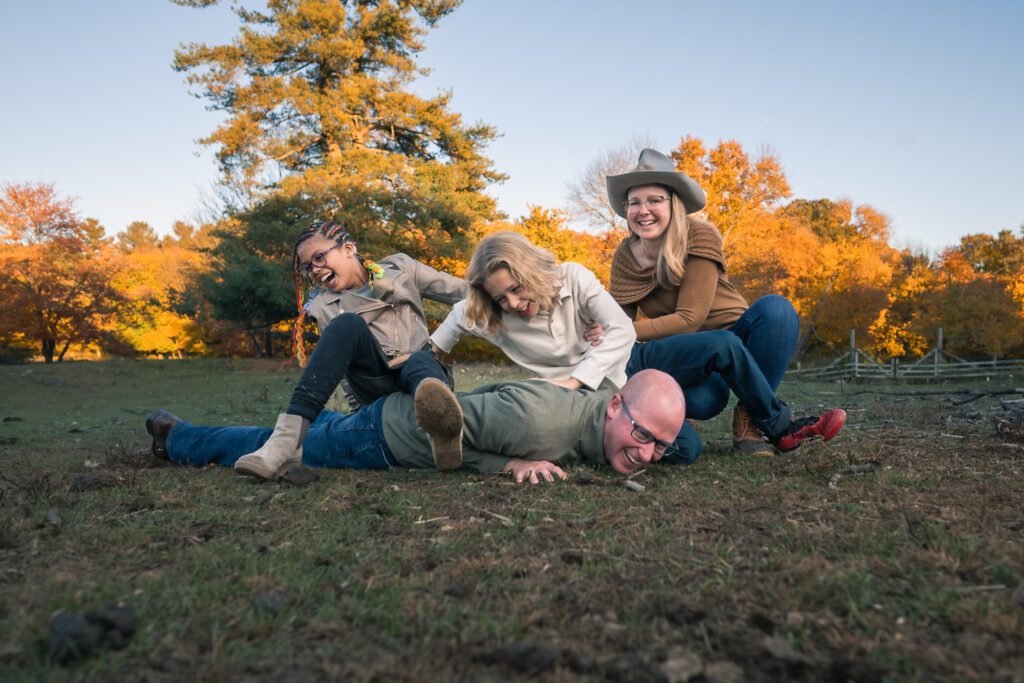
Tips for What to Bring (And What to Leave in the Car)
You don’t need to pack like you’re preparing for a wilderness expedition. But there are a few things that can make the session easier. Especially if you’re dealing with anyone under the age of reason.
Look, I know. Going anywhere with children already requires a minimum of 6-12 bags. The whole concept of having only ONE diaper bag is ridiculous. Children somehow need more equipment than a week-long camping trip. And then you’ve got your bags too. So I get it. The bag situation is already overwhelming.
But a photo session is no different than any other outing. You need the same stuff. And having it can be the difference between rolling with a minor situation and having the whole thing derail.
Bring:
Layers. Especially here in New England, weather can turn on a dime. I’ve had families show up without jackets because they assumed they wouldn’t be wearing them in photos. And then we’re standing in a field at sunset in October and everyone’s freezing. Bring layers. Even if you don’t think you’ll need them.
Snacks and water. I don’t care if everyone just ate a full meal 20 minutes ago. Bring snacks. Kids operate on a mysterious internal clock that has nothing to do with actual hunger, and you do not want to be caught without goldfish when the meltdown hits.
Wipes. For faces, hands, mystery goo, and whatever else needs addressing. You’ll use them.
A change of clothes for little ones. If your kid is the type who’s magnetically drawn to puddles, mud, or any liquid substance, pack a backup outfit. Better to have it and not need it.
Protection from the elements. Think bug repellent, sunscreen, umbrella, and if your session is in the wilderness of Alaska, bear spray, a compass, and a whistle.
A comfort item. If your kid has a beloved stuffed animal or blanket that makes them feel safe, bring it. It might make a sweet appearance in the photos, or it might just live in your bag as emotional insurance. Either way, it’s worth having.
Anything meaningful. An heirloom quilt your grandmother made. A hand-knit sweater. A family book. If it tells part of your story, bring it.
A note: I do try to keep a comfort kit on hand. Water, snacks, bug spray, sunscreen, the works. But not every photographer does this (most don’t, actually). So it’s good to have your own bases covered just in case.
Leave behind:
Your phone. Seriously. Leave it in the car.
I know that sounds dramatic, but here’s why: phones create weird bulges in pockets (nobody wants an iPhone outline on their hip). More importantly, getting a notification mid-session yanks you right out of the moment. I’ve even had parents try to snap photos over my shoulder during sessions, which is… honestly just distracting for everyone. You hired someone to do this. Let them do it. Be in the experience instead of trying to document it yourself.
Any expectation of perfect behavior. Nobody has to perform. Nobody has to smile on command. The goal isn’t compliance. It’s connection.
Perfectionism in general. Grass stains happen. Hair gets wild. Someone might cry. That’s real life, and real life makes better photos than the sanitized version you’re imagining. A rigid plan. The more you can let go of how you think it should go, the more likely it is to turn into something better than you imagined.
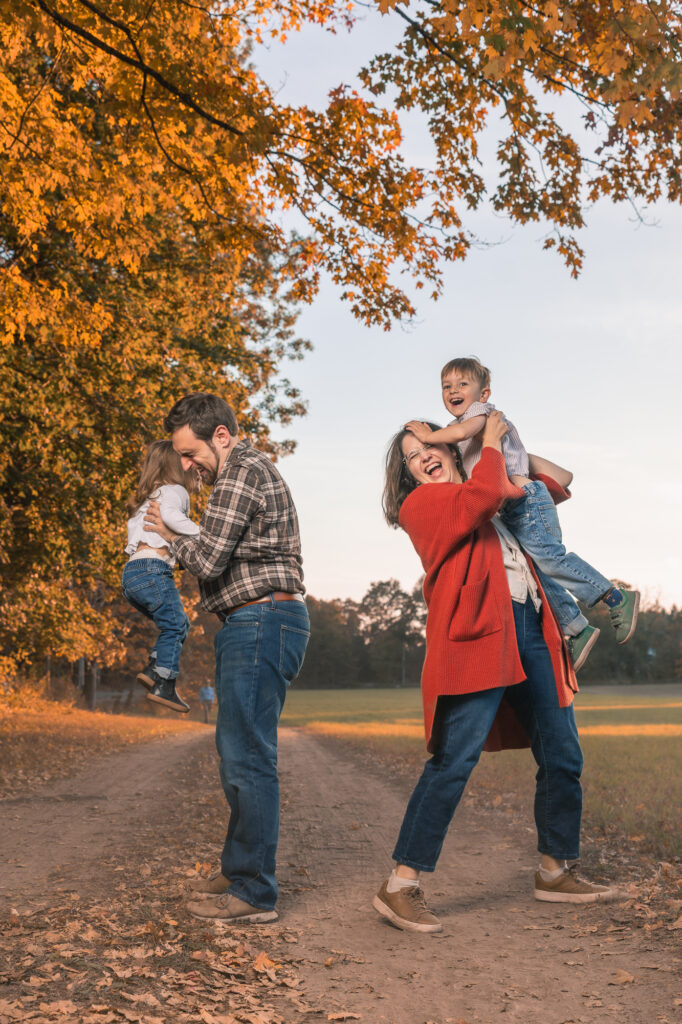
Before the Shoot: Actually Fill Out the Questionnaire
If your photographer sends you a questionnaire or offers a pre-session consultation, don’t skip it.
I know it feels like one more thing on the to-do list. But this is how a good photographer figures out how to work with your family instead of trying to force a generic approach onto people they’ve never met.
For instance: if I know ahead of time that your youngest is usually hesitant in new situations but absolutely loves animals, I might start the whole session at the alpaca pen. Let them get comfortable, let the shyness dissolve naturally, and then we move into the rest of the session.
Or if I know your partner is really camera-shy and needs extra time to warm up, I’m not jumping straight into posed shots. We start with something active, something that gets them moving and distracted, so they can ease into it.
The questionnaire isn’t just logistics. It’s not just “what time works for you” and “what are you planning to wear.”
It’s: How do you feel about being photographed? What makes your seven-year-old crack up? What’s your partner worried about? What matters most to you about this session?
When I have that information, I can design the whole experience around who you actually are. And that makes everything easier. For you and for me.
So if you get sent a form? Take ten minutes and fill it out honestly. It makes a bigger difference than you’d think.
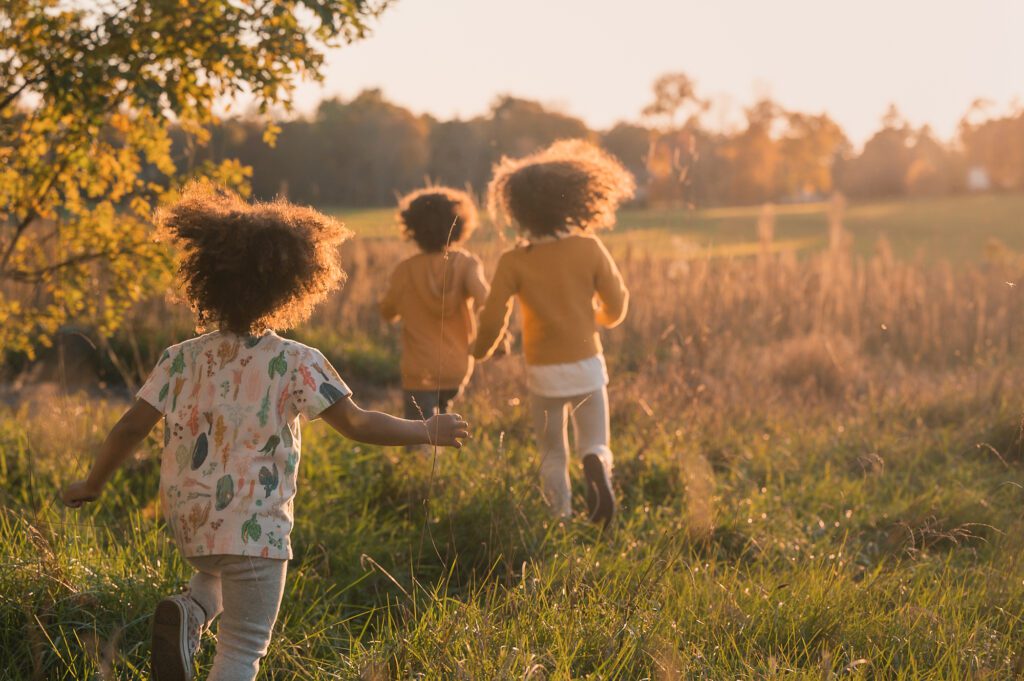
Tips for During the Family Photo Session
At some point, it’s probably going to go “off script.”
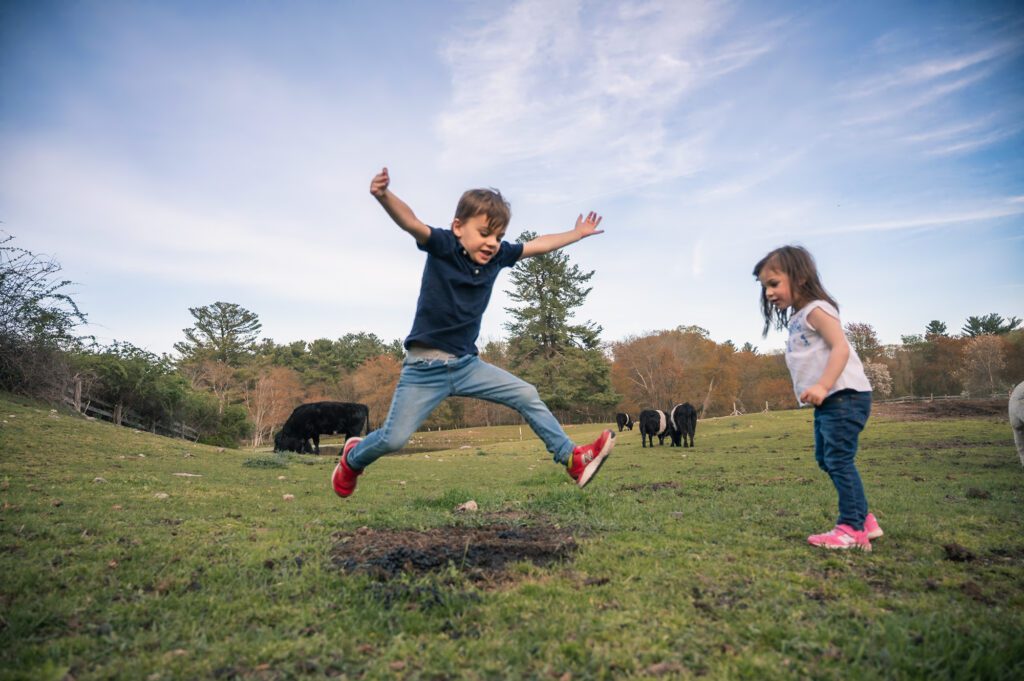
Someone will trip. Someone will refuse to cooperate. Someone will start singing the Paw Patrol theme at full volume for no reason (typical husband behavior.) Your toddler might decide that now is the perfect time to pretend they’re a pig and roll around in the mud.
And you’ll feel that familiar tightness in your chest. That voice in your head: This isn’t going how it’s supposed to. We’re wasting time. We’re not getting the shots.
Here’s what I want you to remember at that moment: This is real life, and it’s beautiful, too.
The thing about control is: the harder you grip, the worse it gets.
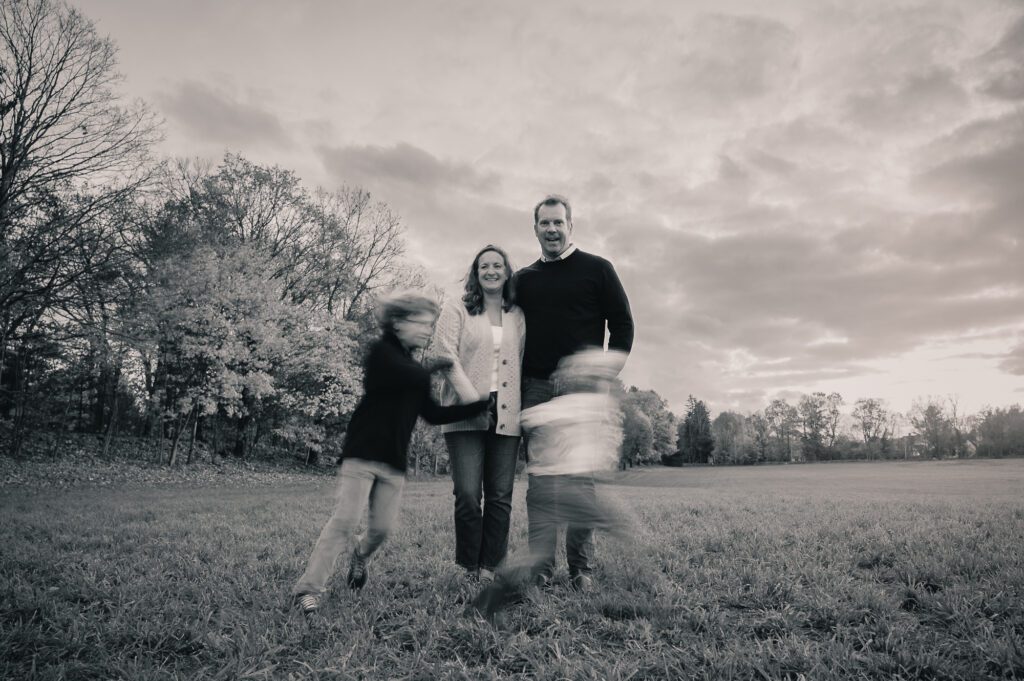
I’ve watched it happen countless times. A parent gets stressed, starts trying to force cooperation out of their kid, and the whole energy shifts. The kid picks up on the tension and either shuts down or acts out more. The other parent gets tense. Everyone starts performing instead of connecting.
And suddenly we’re all just trying to survive the session instead of experiencing it.
Remember the goal you set: to lose yourself in moments with your family.
Not to execute a plan. Not to get the shot. Just to be together.
Actual practical tools for when you’re spiraling:
Look, “just relax” and “let go of control” are easier said than done when you’re actually in the moment with your heart racing and your jaw clenched. So here are some things you can actually do:
The physiological sigh. Two quick inhales through your nose, then one long exhale through your mouth. It sounds simple, but it actually resets your nervous system. Do it once or twice and you’ll feel the shift.
or
4-7-8 Breath. Breathe in for a count of 4, hold your breath for 7, then blow out to a count of 8. Like you’re blowing through a straw. This activates your parasympathetic nervous system (the “calm down” system) and gets you out of fight-or-flight.
A mantra. Pick something short that grounds you. Greg Boyle uses “Now. Here. This.” Just those three words to come back to the present moment. Or “Be here now.” Or “This is enough.” Or “Poop. Crap. Fart.” if that makes you laugh. Whatever lands for you.
Spiritual practice. If you have a spiritual practice, lean on it. A quick prayer, a moment of surrender, asking for help being present. You don’t need to have any particular faith or belief, but sometimes reaching beyond ourselves to the universe at large can really help.
Look at your kid. Not at what they’re doing wrong or how they’re not cooperating. Really try to see them. Their face. Their expressions. Their spirit. Looking beyond the surface can help you remember that who they are is not their behavior.
Let something be funny. When your kid does something completely absurd (and they will), try laughing instead of correcting. That shift from “you’re doing it wrong” to “this is ridiculous and I love you” changes everything.
If any of this resonates and you want support practicing it outside of photo sessions, here are a few resources I use and trust:
Good Inside
Dr. Becky’s work is all about staying regulated as a parent in real moments, not theoretical ones. She’s especially good at helping parents separate who a child is from what they’re doing, which makes it much easier to soften, stay connected, and stop spiraling when things go sideways.
Tara Brach
Tara’s teachings focus on meeting yourself with compassion after you’ve already lost your cool. Her work is deeply practical for moments when you notice tension, self-judgment, or the urge to control, and want a way back without beating yourself up.
Waking Up
A great option if you’re drawn to mindfulness but prefer a secular, straightforward approach. The practices are short, clear, and easy to return to in the middle of real life, not just when everything is quiet and calm.
Ram Dass
If phrases like “Be here now” resonate, this is the well they come from. Ram Dass’s work is an invitation to presence without perfection, and a reminder that the moment you’re in, even the messy one, is the path.
Greg Boyle
Known for the simple grounding mantra “Now. Here. This.” His work centers on compassion, humor, and showing up with love exactly as things are, which can be surprisingly powerful in chaotic family moments.
Bonus tip: Talk to your photographer beforehand about a signal you can use if you need to switch things up. Maybe it’s the straw-breathing thing. If they see you doing that, they know it’s time to pause, change locations, or pivot to something else. A good photographer will be paying attention anyway, but having a signal can help you feel less alone in it.
Your photographer is handling this.
They’ve seen every version of chaos. They know how to work with it. Your job isn’t to manage the session. It’s to be in it.
There’s a concept in Taoist philosophy called wu wei. Effortless action. Going with the flow instead of forcing it. The irony is: when you stop trying to make the magic happen, that’s usually when it shows up.
And when you inevitably forget (when you catch yourself micromanaging or forcing smiles or spiraling into “this isn’t working”), that’s okay too. Just come back. Use one of those tools. Breathe. Look at your people. Remember why you’re here.
The session doesn’t need to go perfectly.
How the photos turn out is in the hands of the photographer.
But by orienting yourself into the flow of what is happening rather than fighting it, at the very least you can have an enjoyable time, and will probably end up with better photos, too.
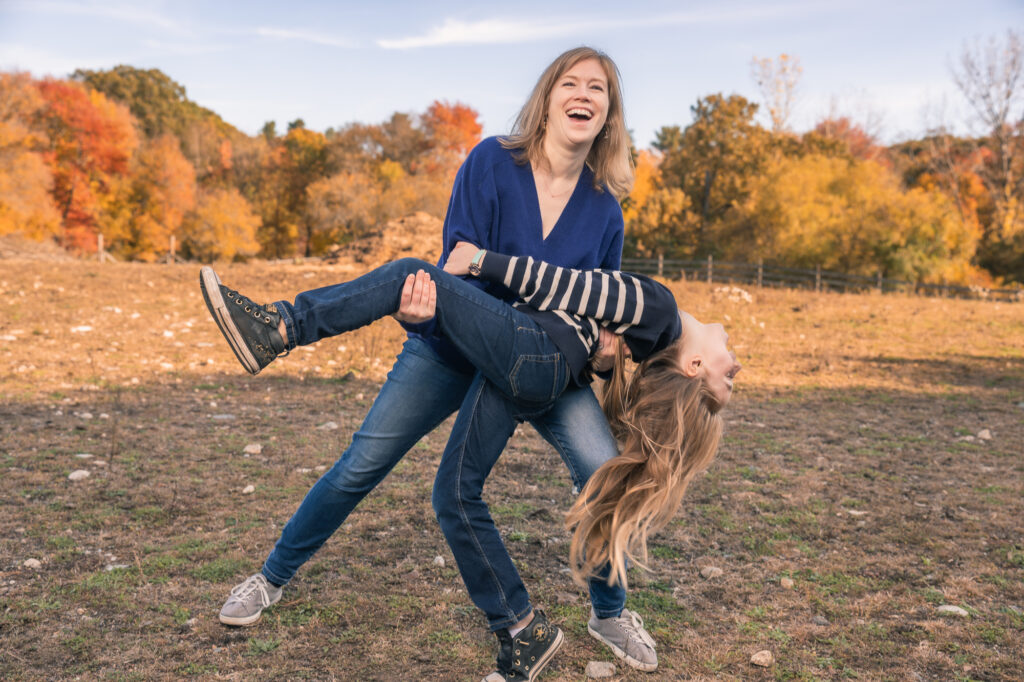
After the Photo Shoot: What Happens Next (And How to Actually Use Your Photos)
Different photographers handle the post-session process differently, so it’s worth knowing what to expect. And what to ask about before you even book.
The delivery process:
Some photographers deliver digital files through an online gallery and that’s it. Others offer prints, albums, and wall art through professional labs. Some (like me) guide you through the whole process of actually using your photos. Not just handing you files and wishing you luck.
Most photographers will take anywhere from a few days to a few weeks to cull through images, edit them, and get your gallery ready. Ask about timeline upfront so you’re not anxiously refreshing your inbox wondering when they’ll arrive.
But here’s the most important question: Where are these images going to live so you actually see them and enjoy them regularly?
Because the answer is usually not “just on my phone.”
I know the instinct is to download everything, change your Facebook profile picture, maybe print one for your mom, and then… the files sit in a folder somewhere and you forget about them.
But you didn’t invest in a session just to have digital files you never look at.
So before the session even happens, it helps to think about how you want to bring these photos to life:
Are you someone who’d love a printed album you can pull out and flip through? Do you want to give framed photos as gifts to grandparents? Have you always wanted a big family portrait on your living room wall that actually reflects the spirit of everyone in it? Do you want a rotating gallery wall with multiple smaller frames?
Some photographers help you figure this out from the start. Others deliver digital files and that’s where their involvement ends.
My approach
I used to see photographers operate on two extremes. On one end, they send you a digital gallery and basically say “good luck figuring out what to do with these.” On the other end, they do the whole big in-person reveal. Measuring your walls, bringing a suitcase of samples. And then you’re sitting there in this high-pressure situation having to make decisions about very expensive artwork on the spot.
I’ve landed somewhere in the middle.
Once your photos are ready, you get a slideshow set to music that you can watch as much as you want for 24 hours. You get to enjoy it privately, cry if you want to (people usually do), show your family, sit with it. No pressure. No one watching you react.
From there, you make a decision about which package you want. How many digital files, what print credit amount, all that. Every package includes both digital files and print credit, which is linked to an online store that’s actually intuitive and easy to use. This guarantees you’ll get something printed. Not just files gathering digital dust.
And for those who really do want to outsource all the thinking, I still offer everything from gallery design to installation. Want me to figure out what should go on your walls and where? I can do that. Want me to just handle the whole thing? That too.
But you’re never making big decisions in the moment with someone hovering over you.
[Want to learn more about my specific process from booking through delivery and beyond? Check out my pricing and process page.]
If your photographer is digital-only, that’s fine. But know that there are people who specialize in helping you figure out what to do with your images. Print shops, design consultants, framing services. You don’t have to navigate it alone.
Think about this before the session, not after. It changes how you approach the whole experience.
Want a detailed guide on how to actually display family photos in your home without it feeling tacky or overwhelming? I wrote a whole piece on it: How to Display Family Photos Without Being Tacky
Questions to Ask Your Photographer
Whether you’ve already booked someone or you’re still shopping around, asking a few thoughtful questions can make a big difference in how confident you feel going into the session.
These aren’t just about logistics. They’re about making sure the photographer’s approach actually aligns with what you need.
About their style and philosophy:
How would you describe your photography style? (Posed, candid, documentary, lifestyle?) What’s your approach to working with kids who are shy, high-energy, or neurodivergent? Do you guide families through the session, or let things unfold naturally? What kinds of moments are you trying to capture?
About preparation and the experience:
Do you offer a pre-session consultation or questionnaire? What happens if the weather’s bad on our scheduled day? How long does a typical session last? What should we do if our kid has a meltdown during the session?
About delivery and what comes after:
How many images will we receive, and how will they be delivered? How long will it take to get our final gallery? Do you offer printed products (albums, framed prints, wall art)? Is there a minimum purchase, or are the packages flexible? Do you help with figuring out what to do with the photos after we get them?
About what makes them different:
What do you love most about photographing families? What’s something you do differently than most photographers? How do you help families feel relaxed and comfortable?
A good photographer will welcome these questions and give you real, thoughtful answers. Not generic marketing speak.
And Those are My Tips for Family Photo Shoots
The session doesn’t have to be stressful. It doesn’t have to be perfect. It just has to be honest.
Show up with your people. Set the intention to lose yourself in the moments. Let go of the script. Trust your photographer to catch what matters.
And when you look back at these photos years from now, you won’t remember whether everyone was looking at the camera or if someone’s hair was messy. You’ll remember that beneath all the stress and worry and endless logistics of family life, there’s love. The kind that doesn’t need to be performed or earned or captured perfectly. It’s just there. Always has been.
If you’re in the Boston area and this is the kind of family photo session you’ve been looking for, I’d love to work with you. Sessions happen at our farm in Lincoln, MA, where there’s space to breathe, play, and just be together.